

What's Really Behind Your Horse's Tail Rubbing
Share
The first sign was the hair on the stall wall.
Long, coarse strands of chestnut caught in the rough wood, fluttering a little in the breeze from the open door. Sarah had been finding them for weeks.
The bald spot at the top of Duchess's tail had grown from quarter-sized to the width of her palm, and the once-glorious dock was a frayed, broken mess.
She had done everything the internet told her to do. Two rounds of dewormer. New fly spray. Fresh shavings.
She'd even pulled the fly sheet she'd been using for three summers and bought a new one. The rubbing didn't stop.
If this sounds familiar, you're not alone — and you're probably looking in the wrong places.
The real causes are usually closer than you think
Tail rubbing has a handful of textbook explanations, and most equestrians cycle through them dutifully: pinworms, sweet itch from biting midges, an unclean sheath or udder, allergic dermatitis.
These are real causes, and they're worth ruling out with your veterinarian.
But there's a category of cause that conventional advice almost never mentions — and it's the one most likely to be the actual problem for the average well-cared-for horse: the skin under the tail is irritated by something you're putting there.
Veterinarians have been quietly raising this flag for years.
Dr. Catherine Dobson, an equine dermatology specialist, has noted that primary seborrhea — what most of us would call dandruff — is "often caused by overuse of hair conditioners and detanglers."
Pro Equine Grooms, one of the most trusted grooming resources in the industry, puts it plainly: "Be wary of using detanglers near the tail bone in case they are drying."
Translation: the very product you're using to keep your horse's tail beautiful might be the thing making her rub it raw.
Why silicone detanglers create the problem
Walk down any tack store aisle and read the labels. The dominant ingredient in conventional detanglers is silicone — dimethicone, cyclomethicone, anything ending in -cone or -siloxane. Silicones coat the hair shaft to create slip and shine.
They work. That's why they've dominated equine grooming for forty years.
The problem is what they do underneath the hair.
Silicone is occlusive — it forms a barrier the skin's natural oils can't penetrate. Over weeks of repeated use, the skin at the dock dries out. It flakes. It itches.
The horse rubs. And the rubbing damages the hair, which makes you reach for more detangler, which dries the skin further.
It's a feedback loop the industry has been quietly profiting from for decades.
Add sun exposure to the mix and the cycle accelerates. Silicone-coated hair can literally cook in the sun, turning brittle and snapping at the slightest brush stroke.
What actually helps
The fix isn't a single product — it's a change in approach. Three things, in order of importance:
First, strip the buildup.
If you've been using silicone-based products, your horse's hair and dock skin are carrying weeks or months of residue.
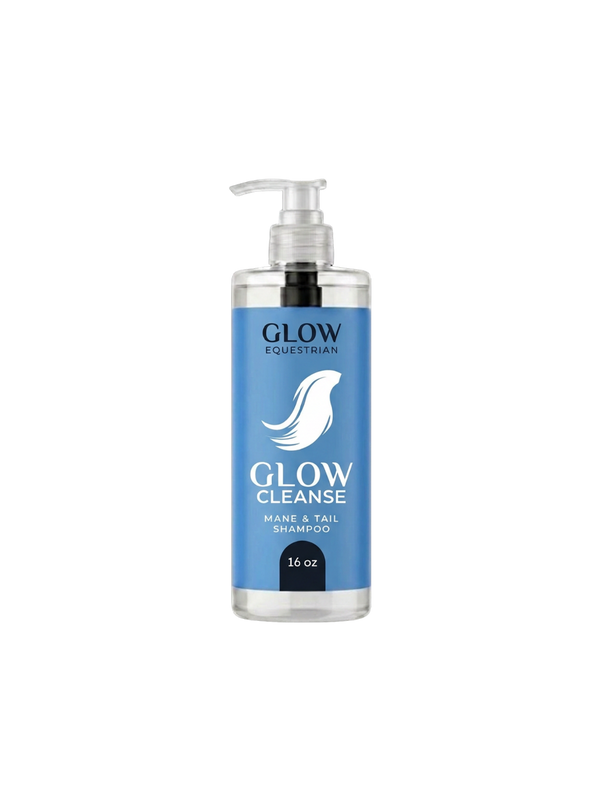
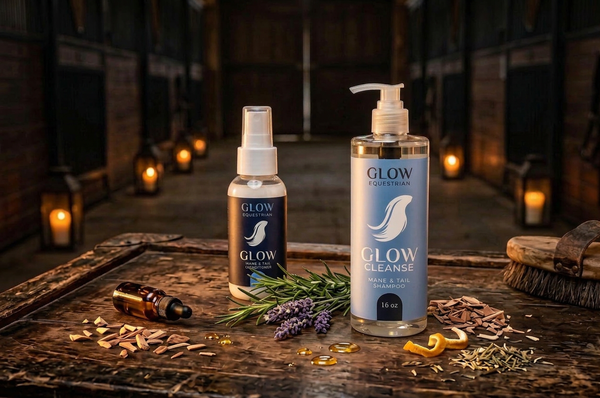
A clarifying, sulfate-free shampoo like Glow Cleanse breaks that barrier without stripping the natural oils underneath.
One thorough wash is usually enough to restart the conversation between your horse's skin and the air.
Second, switch to a conditioner that nourishes rather than coats.
MCT coconut oil penetrates the hair shaft instead of sitting on top of it.
Tea tree and rosemary oils are mild antimicrobials with a long history of soothing irritated equine skin.
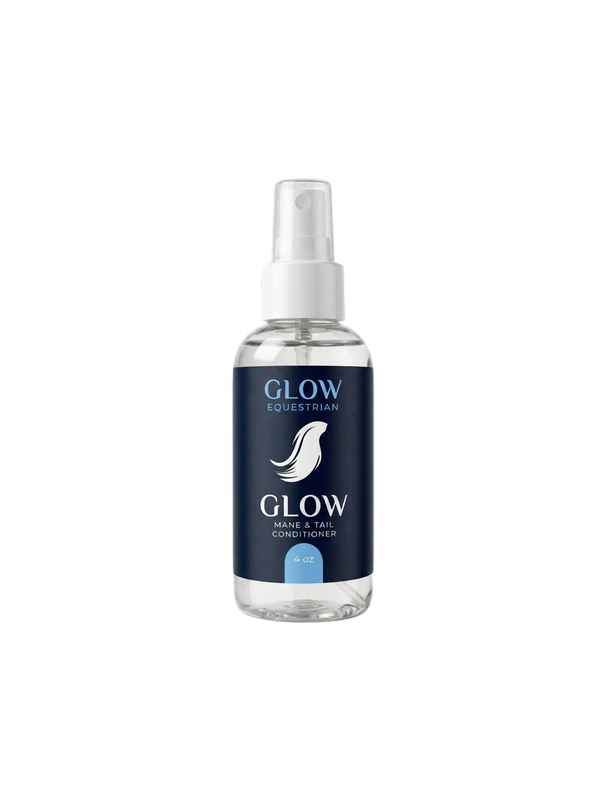
That's the formulation logic behind Glow Mane & Tail Conditioner — and it's why customers using it for tail rubbing report the rubbing stopping inside three to four weeks of consistent use.
Third, be patient.
The skin at the dock is delicate, and once it's been irritated for months, it needs time to recover.
Apply your conditioner directly to the skin at the base of the tail — not just the hair — and massage it in for thirty seconds. Do this daily for four weeks before you decide whether it's working.
The bigger lesson
If your horse has been rubbing her tail for months and nothing is working, the answer is rarely a stronger product. It's usually a cleaner one.
The barn is full of things horses can't tell us about. The least we can do is stop making the problem worse.