

Does Mane and Tail Really Work for Horses?
Share
A horse with a shiny tail is easy to impress.
A horse with a stronger, fuller tail six weeks later is harder to fake.
That is the real question behind does mane and tail really work: are you seeing actual repair, or just temporary slip and shine that disappears at the next wash?
For serious horse owners, this matters more than marketing language.
A healthy mane and tail are not just about appearance in the barn aisle or the show ring.
They reflect how well the hair is being protected from breakage, dryness, buildup, rubbing, and routine grooming damage.
And the truth is simple - some products make hair look better for a day, while others support better hair over time.
Does mane and tail really work - yes, but it depends on the formula
If by "work" you mean easier detangling, more shine, and a smoother feel, many products can do that immediately.
If you mean less breakage, less tail rubbing, improved softness, reduced dryness, and better retention of length over time, the answer depends entirely on what is in the bottle and how consistently it is used.
That distinction gets ignored far too often in equine grooming.
Conventional mane and tail products are usually built to create cosmetic performance first.
They coat the hair shaft, reduce friction on the surface, and leave behind a polished finish.
That can make brushing easier in the moment.
It does not automatically mean the hair is healthier.
In fact, some of the most popular detangling approaches rely heavily on silicone-based ingredients that sit on the outside of the hair.
They can mask roughness, but they do not address the conditions that lead to breakage in the first place.
When buildup accumulates, hair can start to feel dry underneath the coating, and owners often end up using more product just to maintain the same effect.
So yes, mane and tail care can absolutely work.
But only if the product is doing more than covering the problem.
What real mane and tail results actually look like
A treatment that is working does not just make the tail glossy on day one.
It changes the way the hair behaves over time.
You usually see it first in manageability.
The tail pulls apart with less force.
The mane feels softer without turning limp.
There is less snapping during brushing.
Then you start noticing less hair left in the brush, fewer rough or frayed ends, and a more even look through the length. On horses prone to rubbing, improvement may also show up as calmer skin and fewer broken sections near the dock.
Growth is where expectations need to be honest.
No topical product can force dramatic growth beyond what the horse’s biology allows.
What a good formula can do is help preserve the growth the horse is already producing by reducing breakage, dryness, and inflammation.
That is why owners often say a mane or tail is "growing faster" after switching products.
In many cases, the hair is not growing at a radically different rate. It is simply breaking less.
That is a meaningful result.
Length retention is how most impressive tails are built.
Why some mane and tail products disappoint
The equine grooming market has trained owners to accept fast cosmetic payoff as proof of effectiveness.
Spray, brush, shine, repeat.
The problem is that hair health is not measured by surface gloss alone.
When a formula is built around cheap slip agents, heavy fragrance, and superficial coating, it may perform well for a short window while doing very little for the hair itself.
Some products can even leave the mane or tail dependent on constant reapplication because the underlying dryness never improves.
This is especially frustrating for horses dealing with chronic tail rubbing, brittle ends, seasonal dryness, or damage from overgrooming.
In those cases, a cosmetic shortcut is not enough.
You need a formula that supports the hair and the skin conditions around it.
That is where ingredient quality starts to matter.
Not premium as a label. Premium as a function.
What ingredients make mane and tail care actually effective
If you want a real answer to does mane and tail really work, start by looking at whether the formula supports biology or just appearance.
Hair responds better when the care routine helps reduce protein loss, maintain moisture balance, minimize friction, and support the skin at the root.
Oils with a strong performance profile can help with this, particularly when they are chosen for function rather than trend appeal.
MCT coconut oil, for example, is valued because it is lightweight, penetrates more effectively than heavier oils, and helps soften hair without leaving the kind of suffocating residue that drags it down.
Rosemary, tea tree, and cedarwood are often used when the goal extends beyond shine into scalp and skin support, especially for horses prone to irritation or rubbing.
A clarifying wash also matters more than many owners realize.
If the hair is coated in old residue, dust, dried sweat, and previous product layers, even a good conditioner cannot perform the way it should.
Clarification resets the hair shaft and the skin surface so treatment ingredients can actually do their job.
This is the difference between a grooming spray mindset and a hair rehabilitation mindset. One hides problems. The other works on them.
Does mane and tail really work for growth?
This is the most searched version of the question, and it deserves a straight answer.
Yes, the right mane and tail routine can support better visible growth results, but mostly by protecting existing hair.
A horse grows hair from the follicle.
No shampoo or conditioner can override genetics, nutrition, stress, season, or overall health.
What topical care can do is create a better environment for retention.
That means fewer broken ends, less hair lost to tangling, less snap during brushing, less dryness through the length, and less irritation that leads to rubbing.
If your horse grows half an inch but breaks half an inch, you never see progress.
If your routine reduces the breakage, the tail starts to look like it is finally taking off.
That is why treatment-oriented systems outperform superficial detanglers over time.
They do not promise magic. They remove the obstacles that keep growth from showing.
The routine matters as much as the product
Even a strong formula can be wasted by rough handling or inconsistent use.
If the tail is being yanked through daily with a brush, washed with stripping shampoo, then coated with random products that clash with each other, results will stall.
The best routines are disciplined and simple.
Clean the hair properly. Condition with ingredients that support softness and strength. Detangle gently from the bottom up.
Reapply based on the horse’s environment, coat needs, and rubbing tendencies rather than on habit alone.
For horses with more serious damage, a bundled system often makes more sense than mixing products from different brands with different philosophies.
When the shampoo, conditioner, and treatment approach are designed to work together, you get a more predictable outcome.
That is one reason therapeutic systems have gained traction with owners who are tired of buying another bottle that makes big claims and delivers a slick tail for 48 hours.
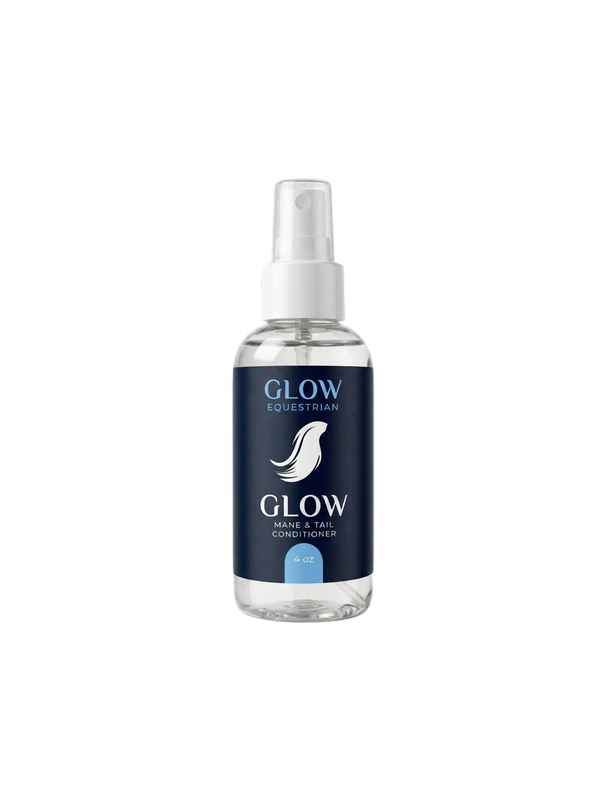
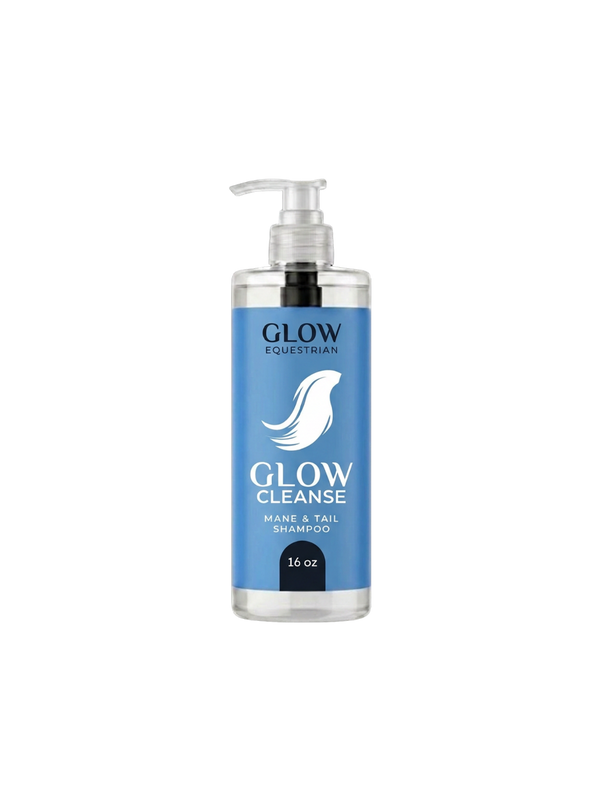
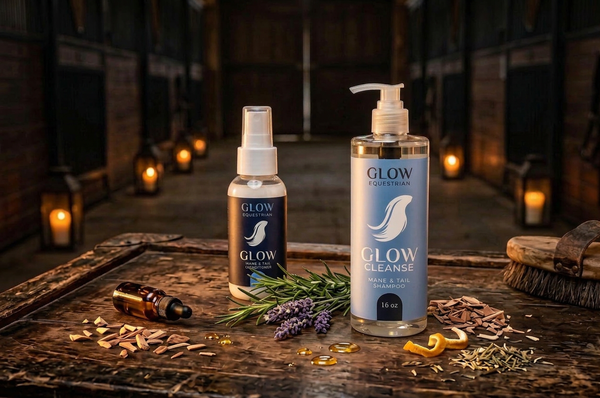
Glow Equestrian’s approach fits that higher standard by treating mane and tail care as long-term repair, not cosmetic maintenance.
So, does mane and tail really work?
Yes - when the formula is built to improve hair condition, not just disguise damage.
If your current product gives you shine but not progress, that is your answer.
If the mane still feels brittle under the surface, if the tail keeps thinning at the dock, if you are brushing out more hair than you are keeping, the product may be performing cosmetically while failing biologically.
Horse owners who expect more should.
Real mane and tail care should leave the hair softer, stronger, easier to manage, and more resilient over time.
It should help sensitive horses, not just polish them. And it should earn its place in your grooming kit with visible results that compound.
The best test is not what the hair looks like right after application.
It is what it looks like weeks later when the shine has had time to prove whether it came from coating or care.