

Silicone Free Hair Care Benefits for Horses
Share
If your horse's tail looks glossy right after grooming but feels dry, thin, or brittle a day later, that is not a moisture win.
It is usually coating.
The real conversation around silicone free hair care benefits starts there - with the difference between hair that looks polished for the afternoon and hair that is actually getting stronger over weeks of care.
For serious horse owners, that distinction matters.
A full tail, a soft mane, and less breakage are not cosmetic extras.
They affect presentation, comfort, maintenance, and in many cases confidence in the products you are using.
Too many conventional detanglers create instant slip while quietly contributing to buildup, dullness, and a grooming cycle that never truly fixes the problem.
What silicone actually does to the hair shaft
Silicones became popular for a simple reason.
They make hair feel smoother fast. On a mane or tail, that can mean easier comb-through, a temporary shine boost, and a slick finish that photographs well.
For riders getting ready for a show or owners trying to fight daily tangles, that immediate effect can be tempting.
The issue is that silicones do not repair damage.
They sit on the outside of the hair shaft and create the impression of health by masking roughness.
Some formulas are heavier than others, and some wash out more easily, but the basic trade-off stays the same.
You get surface slip, often at the expense of long-term conditioning performance.
That matters even more in horses than in humans. Equine mane and tail hair takes more environmental abuse - friction from blankets, rubbing, dirt, sweat, sun, repeated brushing, and stall contact.
If a product only coats the strand instead of helping support the hair itself, the hair can remain vulnerable underneath the shine.
Silicone free hair care benefits that actually compound
The strongest silicone free hair care benefits are not about a dramatic one-minute transformation.
They are about what happens when you stop relying on cosmetic camouflage and start supporting healthier hair behavior over time.
First, you generally get less buildup.
Repeated use of silicone-heavy products can leave residue on the hair shaft and around the base of the mane and tail, especially if cleansing is not strong enough to fully remove it.
That residue can make hair feel oddly heavy, attract dust, and interfere with how well conditioning ingredients reach the strand.
When buildup accumulates, owners often respond by adding more detangler.
That is how a grooming shortcut turns into a grooming trap.
Second, silicone-free care tends to produce a more honest read on your horse's hair condition.
That may not sound glamorous, but it is essential.
If the mane is dry, if the tail is breaking, if there is irritation driving rubbing, you need to see the problem clearly to solve it.
Coating can blur the picture.
A treatment-oriented routine gives you better feedback and a better chance of making the right adjustments.
Third, the right silicone-free formulas can support softness and manageability without suffocating the strand.
This depends heavily on the ingredients.
Removing silicones alone does not make a product effective.
A weak formula without meaningful conditioning agents can leave hair rough.
But a biologically driven formula built around oils and active botanicals can help replenish moisture, reduce friction, and improve flexibility in a way that feels more natural and lasts longer.
Why buildup is a bigger problem than most owners realize
Buildup is not just a cosmetic annoyance.
It can change the entire grooming experience.
Hair that is coated repeatedly may start to repel water unevenly, feel sticky at the root, or lose movement through the length.
Tangles become harder to fully work out because the outer layer is slick in some places and rough in others.
At the dock and crest, buildup can also complicate skin health.
If your horse is prone to sensitivity, tail rubbing, or irritation, layering residues on top of sweat, dust, and natural oils is not a smart strategy.
It depends on the horse, of course.
Some tolerate almost anything.
Others react quickly when the skin barrier gets stressed.
Premium care means formulating for the horse in front of you, not for the illusion of instant shine.
That is where clarifying matters.
A proper routine does not stop at choosing a silicone-free conditioner.
It also includes a cleanser strong enough to remove residue without stripping the hair into further dryness.
When the hair and skin are properly reset, conditioning ingredients have a far better chance of doing meaningful work.
Silicone free hair care benefits for growth and breakage
Owners often talk about growth when the real problem is retention.
Hair cannot look longer if it keeps snapping off.
A tail that breaks six inches up from the bottom will never show the progress your routine is supposedly delivering.
This is one of the most practical silicone free hair care benefits.
When hair is not constantly coated and then aggressively brushed through superficial slip, you can focus on reducing actual breakage.
Better conditioning, less dryness, and less friction all support length retention.
That is especially important in horses with fine hair, rubbed tails, seasonal dryness, or manes that get destroyed under turnout gear.
Again, ingredients matter.
Therapeutic oils such as MCT coconut oil can help support softness and reduce protein loss more meaningfully than a generic shine spray.
Botanical ingredients like rosemary, tea tree, and cedarwood are often valued not just for scent but for their role in a more treatment-minded routine, especially when scalp and skin comfort are part of the goal.
The point is not to romanticize natural ingredients. The point is to use ingredients with a job to do.
Not all silicone-free products are automatically better
This is where a lot of brands take the easy route. They remove silicones, add a clean-looking label, and expect the claim to sell itself.
That is not enough.
A poor silicone-free product can leave the mane rough, difficult to comb, or under-conditioned.
If the formula lacks substantive emollients, if it ignores cleansing balance, or if it is built around marketing language instead of hair biology, the result will disappoint.
Horses with damaged tails do not need ideology. They need performance.
The better question is not simply, Is it silicone-free? It is,
What replaced the silicone, and does it actually improve the hair?
Serious grooming products should be able to answer that directly.
How a treatment-oriented routine outperforms a quick-fix spray
Conventional sprays are usually built to impress on contact.
A treatment-oriented system is built to improve the hair with repeat use. Those are two completely different standards.
The strongest routines start with clarifying, because residue blocks progress.
Then they add conditioning that restores slip through nourishment rather than coating alone.
Over time, that approach can lead to a tail that detangles more easily, stays softer between grooming sessions, and sheds less broken hair in the brush.
This is also where consistency beats intensity.
Saturating the tail with a heavy product once a week will not outperform a balanced routine used correctly.
Hair rehabilitation is cumulative.
The gains come from reducing stress on the strand day after day, not from hiding damage for an afternoon.
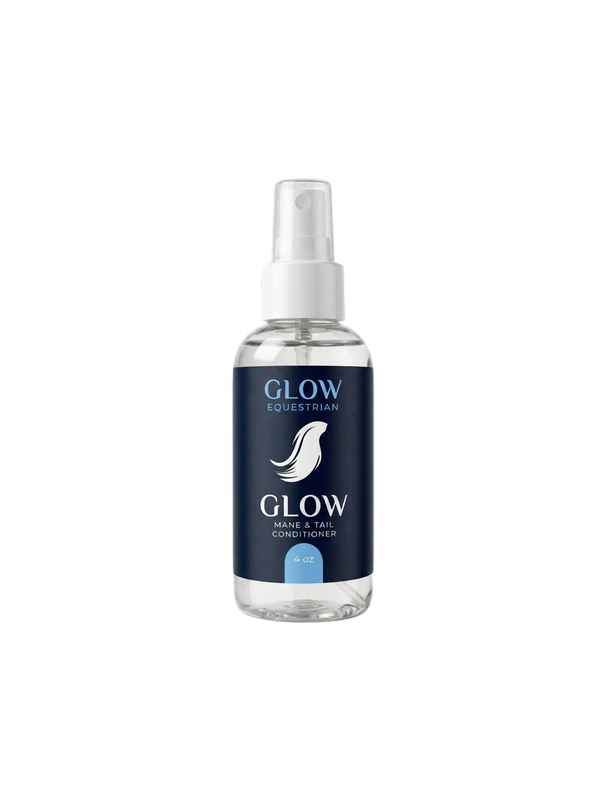
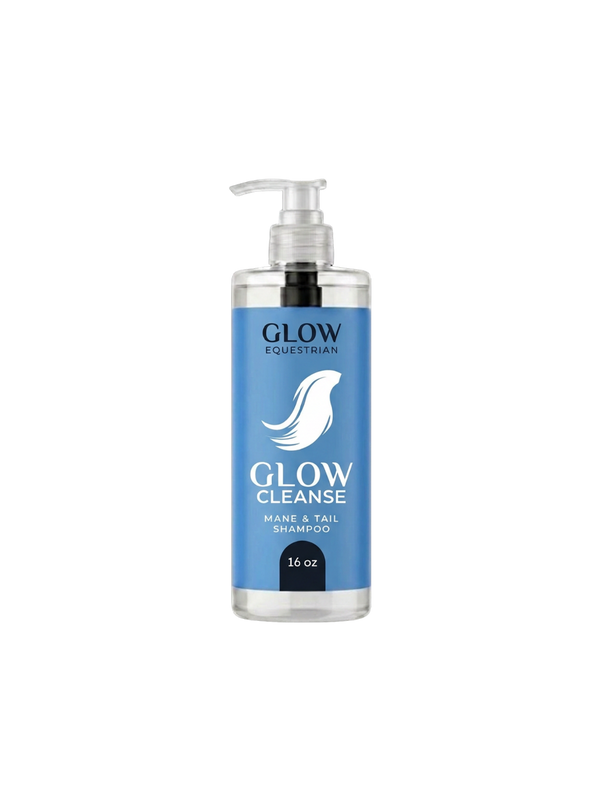
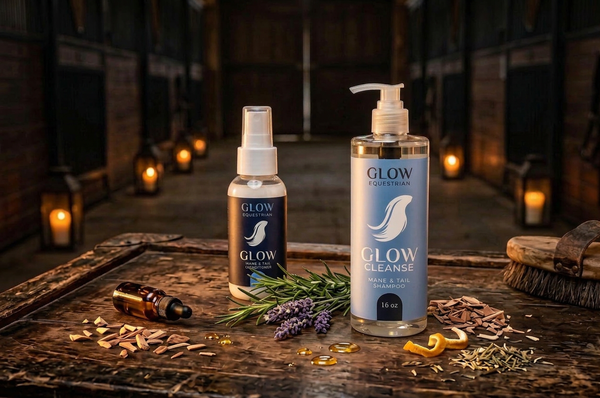
Glow Equestrian was built around that exact philosophy - not superficial shine, but therapeutic mane and tail care that respects how equine hair and skin actually behave.
Who benefits most from going silicone-free
Some horses will show a bigger difference than others.
If your horse already has a thick, low-maintenance tail and minimal exposure to friction or dryness, the improvement may be modest at first.
You may notice cleaner movement, less residue, and a more natural finish rather than a dramatic transformation.
But for horses with chronic tangling, brittle ends, tail rubbing, visible buildup, dullness, or slow length retention, the shift can be significant.
These are the cases where coating has usually failed already.
The owner has tried the shine sprays.
The tail still breaks. The mane still feels dry.
The dock still gets irritated.
That is when a silicone-free routine stops sounding trendy and starts sounding rational.
Show horses, long-maned breeds, horses in heavy training, and animals managed in dusty or high-friction environments tend to benefit the most from products that prioritize true conditioning over cosmetic slip.
These horses ask more of their hair care, so the formulas need to do more.
What to look for if you are making the switch
Choose products that make a clear case for how they condition, cleanse, and support the hair over time.
Look for a clarifying step, quality oils with a purpose, and a routine that addresses both hair shaft health and skin comfort.
Be cautious of formulas that promise miracle shine but say very little about repair, breakage, or buildup.
Expect a short adjustment period if your horse has been on silicone-heavy products for a while.
Once the residue is removed, the true condition of the hair becomes visible.
That can feel discouraging for a moment, but it is also the first honest starting point many owners have had in months.
The horses that turn heads over time are usually not the ones drowning in cosmetic spray.
They are the ones on a routine that respects biology, protects the strand, and delivers results you can still see after the shine of grooming day wears off.