

Therapeutic Horse Grooming That Repairs
Share
A horse with a dull, brittle tail does not have a beauty problem. It has a hair health problem.
That distinction is exactly why therapeutic horse grooming matters. If the routine is built around silicone, fragrance, and instant slip, you may get a polished look for the day while the underlying dryness, breakage, and irritation keep getting worse.
For serious horse owners, grooming should do more than make a coat catch the light.
It should support skin comfort, reduce damage, preserve hair strength, and improve the quality of the mane and tail over repeated use.
That is the difference between cosmetic grooming and a therapeutic approach. One covers flaws. The other works on the cause.
What therapeutic horse grooming actually means
Therapeutic horse grooming is the practice of using grooming steps and formulations that actively improve the condition of the horse's skin, coat, mane, and tail over time.
The goal is not quick shine alone.
The goal is repair, resilience, and healthier regrowth.
That changes how you evaluate products.
A conventional detangler can make hair feel softer in seconds because it coats the shaft. That coating may reduce friction temporarily, but it can also create buildup, mask dehydration, and leave owners thinking the hair is healthier than it is.
Once the coating fades, the weakness is still there.
A therapeutic routine asks harder questions. Is the formula helping reduce protein loss?
Is it supporting the scalp and tail dock where irritation often starts?
Is it using ingredients with a biological purpose, or just cosmetic fillers that create the illusion of condition?
For horses dealing with tail rubbing, slow growth, rough texture, or repeated breakage, those questions are not marketing details. They are the whole point.
Why standard grooming products often fall short
The equine grooming aisle is full of products designed for immediate visual payoff.
That is why so many rely on silicone-heavy formulas and synthetic gloss agents.
They excel at surface performance.
They are less convincing when you look at long-term hair quality.
Silicone is popular for a reason. It gives slip, shine, and easier brushing.
But it does not repair damaged hair, and for some horses it can contribute to a cycle of coating and stripping.
Owners apply product to smooth the hair, then need stronger cleansing to remove residue, then apply more product because the hair feels dry again.
The result is a routine that looks productive but rarely moves the horse toward stronger hair.
There is also the issue of skin comfort.
A horse that rubs its tail is not always reacting to parasites or environment alone.
Sometimes grooming products themselves contribute to irritation through harsh detergents, heavy fragrance, or residue left behind near the dock.
In those cases, more spray is not a solution.
Better formulation is.
This is where a treatment-first standard matters.
When a grooming product is built around therapeutic-grade oils and clinically studied ingredients, the goal shifts from temporary manageability to actual improvement.
That is a higher bar, but it is the one worth paying attention to.
The biology behind mane and tail repair
Hair damage in horses usually builds slowly.
Sun exposure, friction, over-brushing, dirty tack, seasonal dryness, blanket rub, and harsh cleansers all chip away at strength and flexibility.
The mane and tail start to feel coarse. Ends split. Breakage increases. Growth appears to stall, even when the real issue is retention.
Healthy grooming has to respect the structure of the hair shaft and the condition of the skin beneath it.
When the hair is dehydrated, it loses elasticity.
When the skin is irritated, rubbing and inflammation can sabotage growth.
When residue accumulates, even good products struggle to do their job.
That is why clarifying matters, but only when done correctly.
A true clarifying wash should remove sweat, grime, old product, and environmental residue without stripping the hair into brittleness.
From there, conditioning should do more than add gloss.
It should help reduce friction, support softness, and improve the hair's ability to hold up to daily handling.
Ingredients matter here.
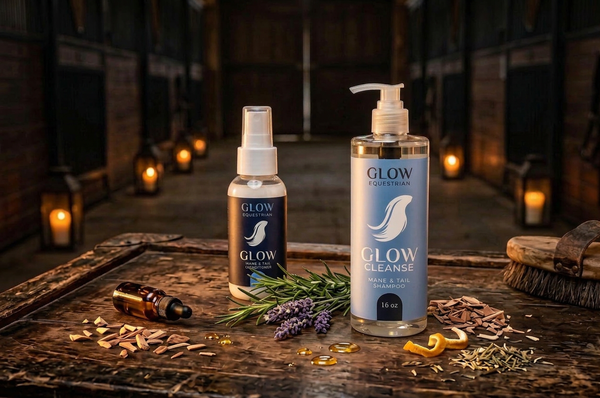
MCT coconut oil is valued because it is lightweight and functional, helping condition without the greasy heaviness that can attract more dirt.
Rosemary, tea tree, and cedarwood are not there for label appeal when used intelligently.
They are chosen because they support scalp and skin health, which matters when irritation and rubbing are part of the problem.
Good grooming starts to look a lot more like targeted care when you understand what each ingredient is actually doing.
How to build a therapeutic horse grooming routine
A therapeutic routine is not complicated, but it does require discipline.
Results come from consistency and product compatibility, not from randomly layering whatever is in the tack room.
Start with a clean foundation.
If the mane and tail are carrying residue from sprays, dust, sweat, or old conditioners, treatment products cannot perform properly.
A clarifying shampoo should be used to reset the hair and skin without creating the stripped, squeaky feel that so many horse owners mistakenly accept as clean.
Once the hair is properly cleansed, conditioning becomes the central step. This is where lower-grade grooming systems usually reveal their weakness.
Many detanglers are engineered for immediate slip and little else. A therapeutic conditioner should help restore softness, reduce snagging, and support strength over time. It should also leave the hair touchable and light, not coated and artificial.
Technique matters too.
Work product through the length of the mane and tail with your hands before reaching for a brush. Start detangling from the bottom and move upward to avoid unnecessary breakage.
If the tail is severely compromised, limit aggressive brushing and let the product do more of the work. Hair that is already weakened does not respond well to force.
For horses prone to tail rubbing, pay close attention to the dock and surrounding skin.
The right routine can help support comfort, but it is not a substitute for ruling out larger issues like parasites, allergy triggers, or management problems.
Therapeutic grooming works best when the horse's broader care picture is also being handled correctly.
Therapeutic horse grooming for common problems
Not every horse needs the same routine intensity.
A show horse with a long, fine tail has different demands than a pasture horse with seasonal dryness and mild rubbing.
The principle is the same, though: match the routine to the real problem, not just the appearance.
If breakage is the issue, focus on reducing friction and limiting stripping cleansers.
If buildup is the issue, your first move should be proper clarification rather than piling on another shine product.
If growth seems slow, look at retention before assuming the hair is not growing.
Many tails are growing, but the ends keep snapping off because the hair is too dry or overhandled to hold length.
If sensitivity is the issue, ingredient quality becomes even more important.
Horses with reactive skin often do poorly with formulas that rely on cheap fillers and heavy scent to seem luxurious.
Premium care is not about decorative packaging.
It is about using ingredients that have a clear purpose and a formulation strategy that respects the animal.
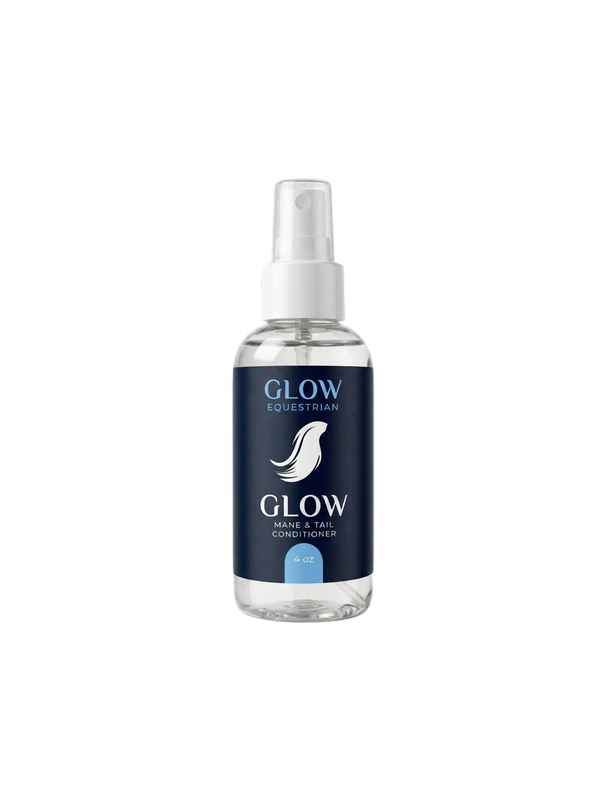
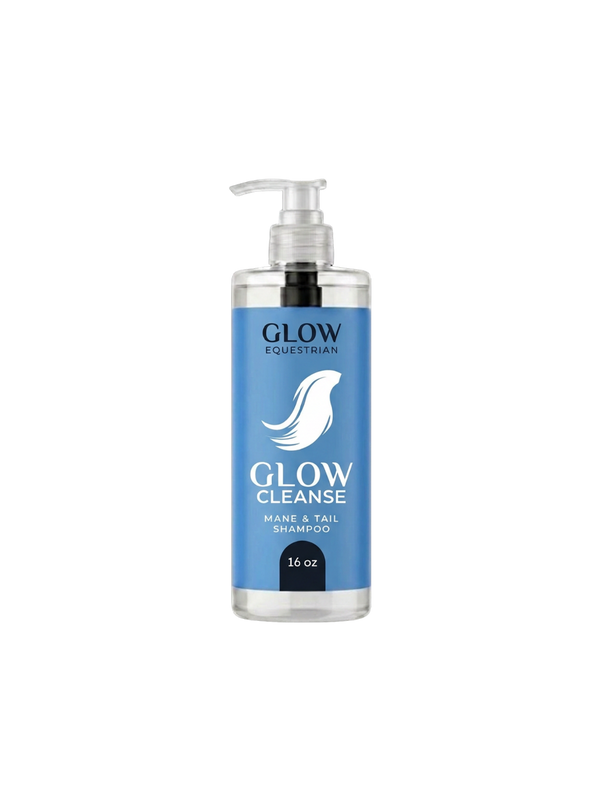
That is where a brand like Glow Equestrian has forced a needed correction in the category.
Instead of chasing the old standard of synthetic slip and fake shine, the focus shifts to biologically driven mane and tail rehabilitation with ingredients selected for function.
That distinction matters when the goal is not just a prettier tail today, but a healthier one months from now.
The trade-off: instant gloss versus lasting condition
There is always a temptation to judge grooming by the fastest visible result.
The problem is that the flashiest finish is not always the healthiest one.
Some products make hair look excellent for a few hours and leave it worse over the long run.
Others may feel less dramatic on day one but create real improvements with repeated use.
That trade-off is where experienced owners separate marketing from performance.
If your horse's mane and tail look good only when saturated with product, the routine is probably not fixing much.
If they stay softer, tangle less, break less, and feel healthier between washes, you are likely on the right track.
Therapeutic horse grooming asks for a little more patience and a much higher standard.
It rejects the shortcut mindset that has defined much of the category for years.
And for owners who care about presentation, comfort, and true hair quality, that is not a niche philosophy. It is simply better horse care.
The best grooming routines do not just leave a horse looking polished for the weekend.
They protect what you are trying to grow, reduce the damage you cannot always see at first glance, and reward consistency with results that hold up in the barn, in the ring, and season after season.