

Mane and Tail Repair and Strengthening Shampoo
Share
A brittle tail that snaps at the ends and a mane that never seems to fill back in usually are not grooming problems.
They are hair fiber problems. That is exactly why the right mane and tail repair and strengthening shampoo matters.
If a formula only strips dirt, masks damage with slip, or leaves behind cosmetic buildup, it can make a horse look polished for a day while the real condition of the hair keeps getting worse.
Horse owners who care about presentation, comfort, and long-term hair quality have started to see the gap.
There is a difference between a shampoo made to produce quick shine and one built to support repair.
That difference shows up in breakage, softness, manageability, tail fullness, and how the hair holds up between washes.
What a mane and tail repair and strengthening shampoo should actually do
A serious formula has to get four jobs right at once.
It needs to remove sweat, dirt, sebum, and residue.
It needs to do that without leaving the hair stripped and rough.
It should support the hair shaft so damaged lengths are less likely to fray or snap.
And it should help create a healthier scalp and dock environment, especially for horses prone to irritation or tail rubbing.
That sounds simple, but this is where most conventional products fall short.
Many grooming shampoos are designed around the appearance of clean hair, not the biology of damaged hair.
They rely on aggressive detergents, heavy fragrance, or coating agents that make the hair feel smoother temporarily.
The issue is that cosmetic smoothness is not the same thing as repair.
If the formula leaves buildup behind or disrupts moisture balance, the mane and tail may feel better right after the bath and worse a few days later.
Strengthening is also often misunderstood.
Hair cannot be brought back to life in the literal sense once it has grown out, but it can be protected, conditioned intelligently, and made less vulnerable to friction and breakage.
That is the practical meaning of repair in equine hair care - reducing the ongoing damage cycle so length and fullness have a chance to hold.
Why conventional shampoos often work against repair
The equine grooming aisle is full of products that promise shine, silkiness, and easy detangling.
Those claims are appealing because they speak to what owners can see immediately.
But many of those formulas are built on shortcuts.
Silicone-heavy systems are a common example.
They coat the hair, flatten the cuticle temporarily, and create instant slip.
That can help a brush glide through in the moment, but it can also disguise dryness, trap residue, and interfere with the owner's ability to tell whether the hair is actually improving.
On some horses, repeated coating creates a cycle where the mane and tail only feel manageable when more product is added.
Then there is over-cleansing.
A shampoo that is too harsh can remove grime and also take too much of the hair's protective lipid layer with it.
The result is hair that feels squeaky, looks puffy when dry, and tangles faster.
For horses with sensitive skin or a history of rubbing, that kind of formula can make the entire problem harder to control.
This is the trade-off owners should pay attention to.
A strong clean is useful when there is heavy buildup.
A gentler wash is often better for routine use.
The best approach depends on what is on the hair, how often the horse is bathed, and whether the horse is dealing with irritation, flaking, seasonal sweat, or product residue.
The ingredients that make a repair-focused shampoo different
If a shampoo claims to support repair and strengthening, the ingredient philosophy should reflect that claim.
Not with vague botanical window dressing, but with ingredients chosen for a real mechanism.
A quality cleansing base matters first. You want surfactants that can lift dirt and residue effectively without turning the wash into a stripping event.
That balance is part chemistry and part formulation discipline.
Cheap shampoos often miss it.
Then look at the treatment side.
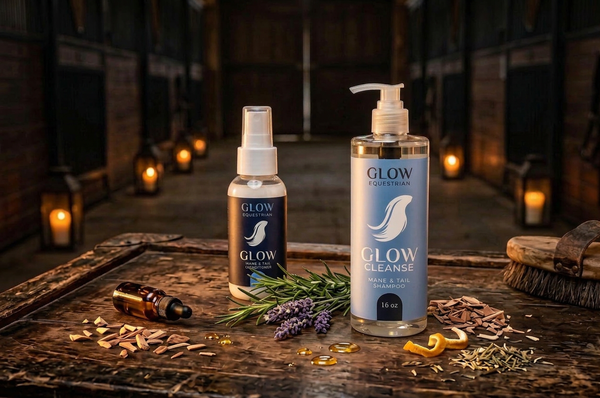
Lipid-supportive ingredients such as MCT coconut oil can help improve softness and reduce the dry, brittle feel that leads to breakage during brushing and braiding.
Essential oils such as rosemary, tea tree, and cedarwood are often used because they support a cleaner, healthier skin environment and can be especially valuable around the dock and crest where irritation, buildup, and rubbing tend to start.
They are not magic, and they do not replace veterinary care when there is a true medical issue, but in a well-formulated system they can support better day-to-day conditions for growth retention.
That last point matters. Owners often talk about growth when what they really need is retention.
Hair can grow at the root and still never look longer because the ends keep breaking off.
A better shampoo helps by reducing the conditions that lead to that loss.
How to tell whether a mane and tail repair and strengthening shampoo is working
Do not judge it by the rinse-out feel alone.
Some of the most deceptive shampoos leave hair feeling very slick in the wash and disappointing once fully dry.
A repair-oriented formula should show its value over repeated use.
First, pay attention to breakage during grooming.
Are you pulling fewer short pieces from the brush?
Is the tail holding a fuller bottom line instead of thinning out at the center?
Second, look at texture after the hair is completely dry.
Healthy improvement usually looks softer, smoother, and less frayed, not waxy or unnaturally coated.
Third, watch how long the hair stays manageable between washes.
When the formula is doing real work, the mane and tail should resist tangling better without becoming dependent on heavy masking products.
If the horse is prone to rubbing, the dock and base of the mane also tell an important story.
Less flaking, less greasy residue, and a calmer skin surface are signs that the routine is moving in the right direction.
If rubbing continues aggressively, though, shampoo alone is not the answer.
Parasites, allergies, environmental irritation, or skin infection may need to be ruled out.
Shampoo is not enough without the right routine
This is where many owners get frustrated. They buy one product, use it once, and expect a damaged tail to behave like untouched hair. That is not how repair works.
A shampoo creates the foundation by removing what should not be there and setting the hair up to receive conditioning well.
But if the hair is already dry, fragile, and prone to snapping, washing needs to be paired with a true follow-up treatment.
That means a conditioner or leave-in approach designed to reduce friction, support moisture balance, and keep the cuticle from getting rough again the next day.
Technique also matters more than most people think.
Scrubbing the lengths aggressively, towel-drying with friction, brushing from the top down, or washing too often can cancel out the benefits of a better formula.
On the other hand, washing with intention, rinsing thoroughly, conditioning consistently, and detangling from the bottom up can make the same product perform far better.
For heavily coated show horses or animals carrying layers of sprays and dust, a more clarifying wash may be needed periodically.
For sensitive horses or those in a maintenance phase, less frequent but more strategic washing often produces better hair retention.
It depends on the horse, the season, and what else is being applied between baths.
What premium horse owners should expect from a better formula
A premium shampoo should justify itself in performance, not packaging language.
You should expect cleaner hair without that stripped feel.
You should expect less breakage over time, not just more shine under the barn lights.
You should expect ingredients chosen for biology, not marketing theater.
That is the difference between conventional grooming and therapeutic grooming.
One is built to create a cosmetic finish.
The other is built to improve the condition of the hair and skin so the results become more visible with each wash.
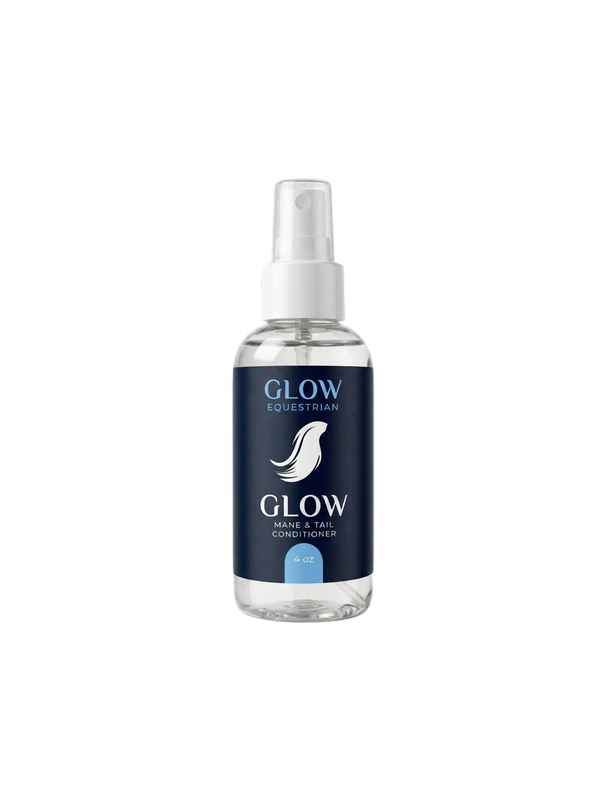
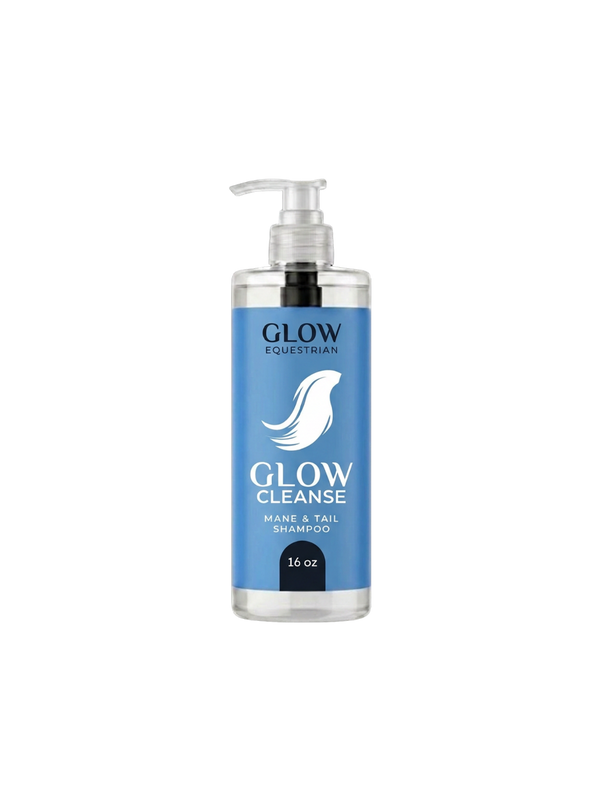
Glow Equestrian has pushed that standard by treating mane and tail care as rehabilitation, not decoration.
If your horse's mane and tail are dry, weak, or stuck in a cycle of buildup and breakage, raise the standard for what shampoo is supposed to do.
The right formula should clean with precision, support strength, and make every step after the bath more effective.
When the biology is respected, the results stop looking temporary.