

Best Silicone Free Hair Treatment for Horses
Share
A tail can look show-ring glossy and still be in trouble.
If it feels coated, dries out quickly after washing, snaps during grooming, or leaves your horse rubbing at the dock, surface shine is not the same thing as hair health.
The best silicone free hair treatment for horses does more than make a brush slide through the hair.
It supports the hair and skin conditions required for lasting softness, strength, and growth.
Conventional detanglers often sell an immediate visual payoff: instant slip, instant sheen, instant control.
The shortcut is usually silicone.
It can make damaged hair feel smooth by coating the outside of the strand, but it does not restore what dryness, friction, over-washing, sun exposure, and mechanical breakage have taken away.
Over time, that coating can leave owners chasing results with more product while the mane and tail beneath it remain brittle.
Why silicone creates a misleading result
Silicones are used because they are effective at creating slip.
That is not the same as treatment.
A silicone layer can reduce the rough feel of a compromised cuticle and make grooming easier in the moment, which is why many sprays have earned a permanent place in tack rooms.
The trade-off is buildup.
Hair that is repeatedly coated may appear polished but feel heavy, resistant to moisture, and increasingly dependent on another application to look presentable.
On some horses, product accumulation around the tail dock can also complicate a care routine already challenged by sweat, dirt, dead skin, or sensitivity.
A silicone-free approach asks a better question: what does this mane or tail need to function well without a cosmetic mask?
Usually, it needs gentle cleansing, lipid support, less friction, and consistent care.
Those are slower promises than “instant show shine.”
They are also the ones that hold up between baths, braiding sessions, turnout, and long grooming days.
What the best silicone free hair treatment should do
A serious formula should be designed around the biology of equine hair, not around a temporary finish.
Look for a treatment that conditions without leaving a waxy film, improves manageability without making hair limp, and supports both the length of the tail and the skin at its base.
Treat dryness with compatible oils, not heavy coating agents
Hair loses flexibility when its protective lipids are depleted.
That is when it starts to feel rough, tangle easily, and break during normal brushing.
Thoughtfully selected oils can help replenish softness and reduce friction without relying on a synthetic coating.
MCT coconut oil is especially relevant because it is lightweight and stable, rather than the thick, greasy oil many owners expect from an oil-based treatment.
In a well-built formula, it helps condition the hair while keeping the finish clean enough for regular grooming.
The goal is not an oily tail.
The goal is hair that remains supple when the product is no longer sitting on top of it.
Support the tail dock as well as the tail length
A damaged tail is not always just a hair-length problem.
Tail rubbing can be driven by a range of causes, including insects, skin irritation, environmental triggers, hygiene issues, and medical conditions.
A grooming product cannot diagnose or replace veterinary care when rubbing is persistent, severe, or accompanied by sores, swelling, or hair loss.
But a high-quality silicone-free treatment can be an important part of reducing avoidable irritation from dryness and harsh grooming practices.
Botanical ingredients such as rosemary, tea tree, and cedarwood are valued in premium equine care for their cleansing, skin-supportive properties and fresh, purposeful profile.
Formula quality matters here.
Essential oils should be properly diluted and used within a balanced system, not poured into a bottle for a trendy label claim.
Reduce protein loss and breakage from daily handling
The horse with a thin tail often does not need more shine.
That horse needs fewer broken hairs.
Every aggressive detangling session, tight band, dry brush stroke, and snag on a blanket can turn length into loose strands on the barn floor.
A treatment-oriented conditioner should improve slip through real conditioning, so you can separate knots with less force.
It should leave hair flexible enough to move instead of fracture.
This is where a routine earns its value: fewer broken strands today can become a visibly fuller tail months from now.
Best silicone free hair treatment: a system beats a spray
One bottle rarely solves a buildup-and-breakage cycle by itself.
If the mane and tail have been coated for months or years, treatment needs a clean starting point.
That is why a clarifying wash and a silicone-free conditioner work better as a system than as disconnected products.
Start by clarifying when hair feels dull, heavy, unusually difficult to wet, or coated despite repeated washing.
Clarifying shampoo is not meant to be used aggressively at every bath.
Used as needed, it removes the residue that can keep a conditioner from doing meaningful work.
Follow with a treatment conditioner while the hair is clean and damp.
Work it through the tail length with your fingers first, then use a wide-tooth comb or a brush designed for gentle detangling.
Begin at the ends and work upward.
This is not glamorous advice, but it is one of the clearest ways to prevent avoidable breakage.
For horses prone to dry tails or rubbing, apply the routine consistently rather than waiting until the tail is already matted and short.
Hair rehabilitation is cumulative.
The strongest results come from reducing damage repeatedly, not from one dramatic wash day.
How to judge a formula beyond the front label
“Silicone-free” is a useful filter, but it is not a complete standard.
ome products remove silicones only to replace them with low-value fillers, overpowering fragrance, or ingredients that add little beyond temporary feel.
Read the ingredient philosophy and ask whether the formula was built to condition hair and respect sensitive skin.
Premium products should be transparent about what is doing the work.
Therapeutic-grade organic oils, single-origin sourcing, and made-in-USA production can signal a higher level of care, but performance still matters most.
The formula should leave a mane and tail soft, manageable, and naturally glossy without the slippery, plastic-like residue of a conventional detangler.
It also needs to fit the horse in front of you.
Fine manes may need a lighter application than coarse, dense tails.
Horses living in dry climates may benefit from more regular conditioning, while horses that sweat heavily or live in dusty turnout may need more frequent cleansing.
If your horse has known allergies or reactive skin, introduce any new product carefully and consult your veterinarian when symptoms are ongoing.
The standard: results that remain after grooming
The real test is not whether the tail photographs well five minutes after application.
It is whether it stays easier to manage, feels softer at the next grooming session, sheds fewer broken hairs, and becomes less dependent on a cosmetic cover-up.
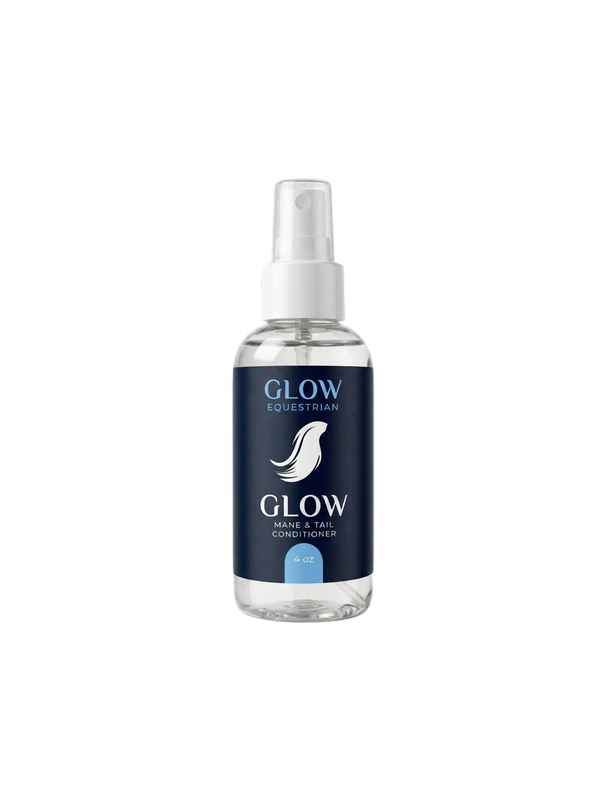
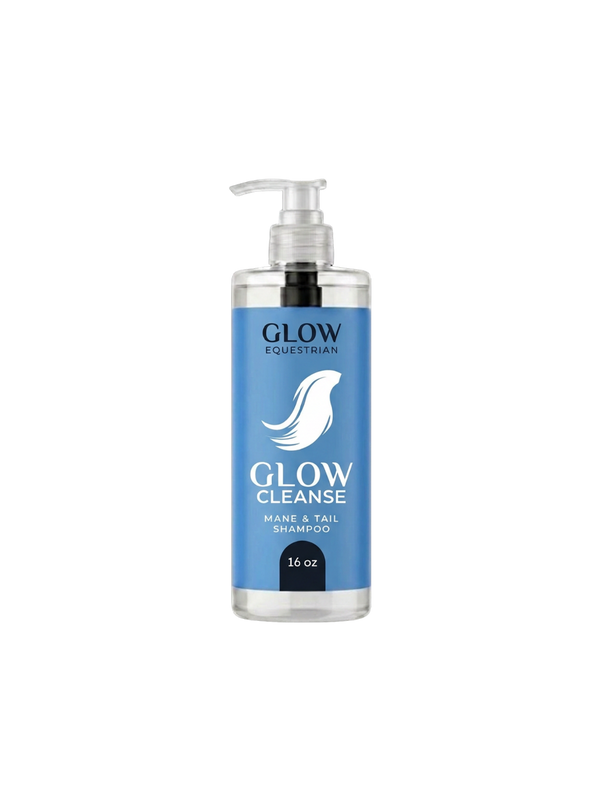
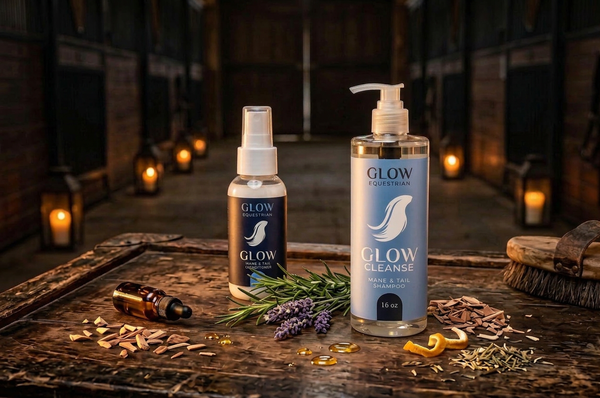
Glow Equestrian was built around that higher standard: a clarifying-and-conditioning approach that rejects the silicone shortcut in favor of biologically driven care.
The point is not to make a horse look artificially finished.
It is to give dedicated owners a better path toward a healthy, full, naturally luminous mane and tail.
Choose treatment over coating, then give the routine time to prove itself.
Your horse’s best hair will not feel like product.
It will feel like healthy hair.