

Best Sulfate Free Hair Treatment for Horses
Share
A glossy tail can hide a problem for a day.
A truly healthy tail holds up through washing, brushing, turnout, sweat, and the rubbing that starts when skin is irritated.
That is the real standard behind the best sulfate free hair treatment for horses: not an artificial slip, not a perfume-heavy shine, but a routine that cleans without stripping and treats the hair and skin beneath it.
Sulfate-free is a meaningful starting point, especially for horses with dry, brittle manes, chronic tail rubbing, or sensitive skin.
It is not, however, a complete answer.
Many products leave out harsh sulfates only to replace them with heavy silicones, waxes, and coating agents that make hair feel better while buildup and damage continue underneath.
A treatment should do more than avoid one ingredient category.
It should support the biology of healthy hair over repeated use.
Why sulfate-free shampoo matters for mane and tail care
Sulfates are powerful cleansing agents.
They can remove dirt, sweat, and oil effectively, which is why they are common in conventional shampoos.
The downside is that frequent or aggressive cleansing can take too much of the horse's protective surface oil with it.
On a horse already dealing with a dry dock, dandruff, breakage, or seasonal irritation, that stripped feeling can become part of the cycle.
When skin is dry or compromised, a horse may rub. When the tail is rubbed, the hairs weaken and snap.
Then owners reach for more detangler, more shine spray, and more washing.
The tail may look polished after grooming, but the underlying problem has not been addressed.
A well-formulated sulfate-free clarifying shampoo gives you a better balance.
It needs enough cleansing power to remove grime, old product residue, and environmental buildup without treating the mane and tail like something that needs to be squeaky-clean.
Clean hair is not supposed to feel rough.
If it does, the formula or the washing frequency deserves a second look.
Sulfate-free does not automatically mean gentle
This is where labels can be misleading. “Natural,” “sulfate-free,” and “silicone-free” are not guarantees of a high-performing equine formula.
A product can be sulfate-free and still be underpowered, poorly preserved, overloaded with fragrance, or built around ingredients that offer little therapeutic value.
The better question is what the formula does after it cleanses.
Does it help restore softness without masking the hair? Does it support a comfortable, balanced tail dock?
Does it make daily grooming easier because the hair is becoming more resilient, rather than because it has been coated in temporary slip?
What the best sulfate free hair treatment should actually do
A treatment-oriented system has two jobs: remove what does not belong on the hair and return what damage, weather, friction, and grooming have taken away.
Those jobs should work together, not compete.
First, it should clarify responsibly.
Dirt, sweat, dust, and layers of conventional detangler can keep conditioning ingredients from reaching the hair effectively.
Clarifying is useful, but it should not mean aggressive stripping. The goal is a clean foundation for treatment.
Second, it should condition with ingredients chosen for function, not just feel. Lightweight oils can help improve softness and manageability while reducing the dry, rough texture that catches on brushes and breaks under tension.
MCT coconut oil is particularly valuable in a hair-care context because its smaller molecular structure supports penetration rather than simply sitting on the surface.
That distinction matters when you are trying to improve the condition of a tail, not just make it photograph well.
Third, it should respect the skin.
Tail rubbing is rarely solved by cosmetic shine.
It can have multiple causes, including insects, allergies, moisture, parasites, and skin conditions that require veterinary attention.
But a harsh or buildup-prone grooming routine can make an already uncomfortable dock worse.
Therapeutic botanical ingredients such as rosemary, tea tree, and cedarwood can be useful when properly formulated and diluted for equine skin, particularly as part of a consistent skin-and-hair-care routine.
Finally, it should reduce the mechanical damage that steals length.
Hair growth is only half the equation. If the ends break as fast as new hair grows, the mane or tail never gains visible length.
Conditioning that improves flexibility, reduces tangles, and lowers friction during brushing protects the length the horse has already earned.
The silicone shortcut versus real repair
Conventional detanglers are designed to deliver an immediate wow factor. Silicone-based formulas can create dramatic slip and shine within seconds.
For a show-day finish, that appeal is obvious.
The problem is what happens when that surface coating becomes the entire strategy.
Silicones can accumulate, especially when paired with shampoos that do not remove them effectively.
Over time, the mane and tail can feel coated but dry, look glossy but become fragile, and resist the very conditioning ingredients meant to help it.
Owners often interpret the resulting roughness as a need for more detangler.
That is the shortcut at work.
There is a trade-off here.
A silicone-heavy spray may provide the most instant glide for a particularly stubborn knot.
But if your horse routinely struggles with breakage, dullness, or tail rubbing, instant glide is not the same as long-term progress.
A treatment system may require consistency and a reset period as buildup is removed.
The payoff is hair that feels better without depending on a coating to fake it.
Build a routine that compounds results
The strongest results come from repetition, not a single wash.
Start by clarifying the mane and tail when product buildup, grime, or dullness is present.
Work shampoo through the hair and focus attention on the tail dock without scrubbing aggressively. Rinse thoroughly.
Residue from any cleanser can create its own irritation.
Follow with a true conditioner or treatment, distributing it through the length of the mane and tail.
Give it time to contact the hair rather than rinsing immediately.
This is where rushed grooming loses ground: treatment ingredients cannot perform if they are washed away before they have a chance to work.
Between washes, brush with intention.
Begin at the ends, use your fingers to separate larger tangles, and work upward in small sections.
Do not attack a dry, compacted knot from the top.
Even the best formula cannot fully protect hair from forceful brushing, and repeated pulling is one of the fastest ways to turn a growing tail into a broken one.
For horses prone to rubbing, monitor the dock as closely as the tail length.
Look for flakes, redness, scabs, heat, insect activity, or changes in behavior.
If rubbing is persistent, severe, or accompanied by skin lesions, bring in your veterinarian.
Grooming products are part of care, not a substitute for diagnosing medical causes.
How to judge results without being fooled by shine
Do not evaluate a new treatment only on wash day.
Look at the horse after several grooming cycles.
Is the hair easier to separate when dry?
Are fewer strands coming out in your brush? Does the tail feel supple instead of waxy?
Is the dock calmer, with less compulsive rubbing?
Is the mane retaining length at the ends?
Those are meaningful markers because they point to reduced breakage and better manageability, not a temporary cosmetic finish.
Take a photo before you begin and compare it after four to six weeks under similar lighting.
Progress in equine hair care is often gradual, but it becomes unmistakable when you stop judging it by a single post-bath shine.
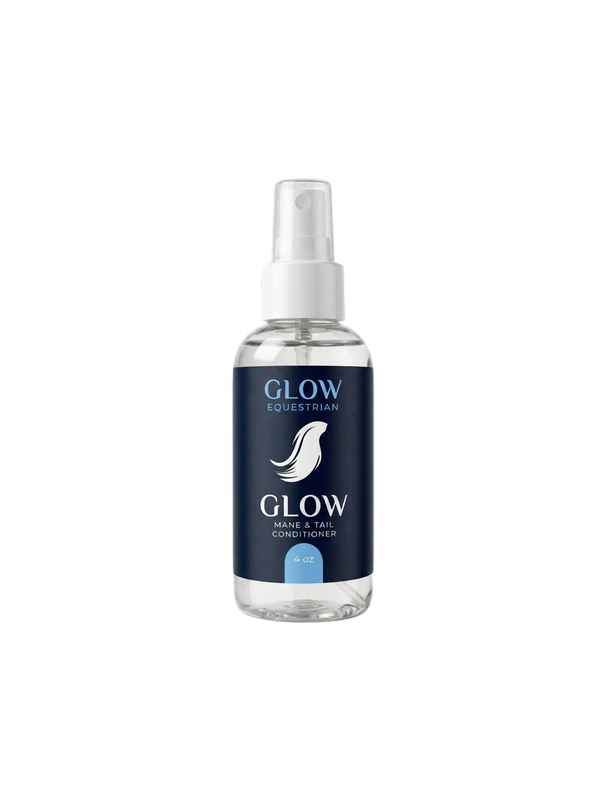
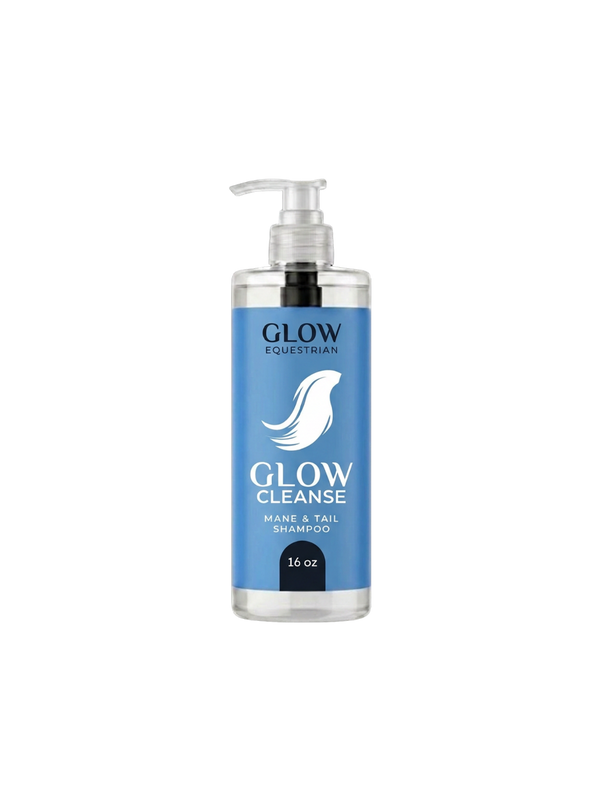
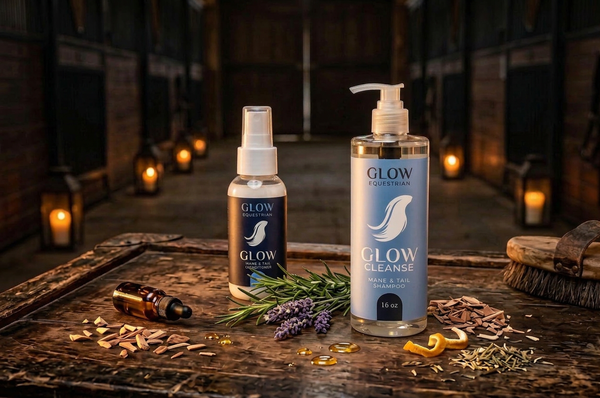
Glow Equestrian was built around this higher standard: a clarifying and conditioning approach that rejects superficial silicone slip in favor of therapeutic-grade oils and ingredients selected to support stronger, softer hair over time.
The right product should make grooming feel less like damage control.
Choose a sulfate-free treatment that cleans intelligently, conditions beyond the surface, and gives your horse's mane and tail the chance to become stronger with every routine.