

Why Silicone-Free Hair Products Matter for Horses
Share
A tail can look glossy in the wash rack and still be dry, fragile, and breaking off underneath.
That is the central reason why silicone free hair products deserve a closer look from serious horse owners.
The goal is not simply a mane that photographs well today.
It is hair that stays supple, resists breakage, grows with fewer setbacks, and feels better week after week.
Conventional detangling sprays often promise instant silkiness.
Many deliver it by coating the hair shaft with silicones.
That coating can create dramatic slip, shine, and a temporarily polished finish.
But when a product is designed primarily to mask roughness, it can leave the underlying problem untouched.
Why Silicone-Free Hair Products Are Different
Silicones are synthetic ingredients used in many human and equine hair products because they form a thin film around the hair.
This film can reduce friction, help a brush move through knots, and make damaged hair appear smoother.
For a horse headed into the show ring, that immediate visual effect is easy to understand.
The problem is not that every silicone is automatically harmful.
It is that silicone-heavy grooming can become a shortcut.
Repeated layers may accumulate on the mane and tail, particularly when the hair is not thoroughly clarified between applications.
Instead of treating the condition of the hair and the skin at its root, the product keeps adding another cosmetic layer over dryness, friction damage, and residue.
A silicone-free approach asks more of a formula.
Without relying on a synthetic coating to manufacture shine, ingredients must support softness, manageability, and moisture balance in a way that performs beyond the first brush-through.
That is the difference between cosmetic grooming and therapeutic care.
Slip is not the same as strength
A slippery tail is easier to comb, but slip alone does not mean the hair is stronger.
A horse may still have tail hairs snapping at the dock, a thinning lower tail, or brittle ends that never seem to gain length.
In those cases, a beautiful surface finish can be misleading.
Healthy-looking hair needs reduced friction, but it also needs a routine that respects the hair fiber itself.
Conditioning oils can help lubricate and soften the shaft.
Careful cleansing can remove dirt, sweat, and old product residue that make hair dull and stiff.
Most importantly, consistent care gives fragile hair a chance to retain length instead of repeatedly breaking before it can grow out.
Buildup changes how hair behaves
Over time, buildup can make manes and tails feel oddly heavy, waxy, or dry despite frequent conditioning.
Owners often respond by applying more detangler, more shine spray, or more oil.
The cycle continues because the hair has not been properly reset.
This is especially frustrating in horses with thick tails, fine manes, white hair that shows every trace of grime, or sensitive skin at the dock.
A coating may initially help repel dust, but it can also trap the effects of repeated product use if cleansing is insufficient.
The result is hair that looks managed but feels increasingly dependent on the next application.
The Biology Behind Better Mane and Tail Care
Horse hair is made of keratin. Once the hair has grown from the follicle, it cannot heal itself like living skin can.
It can, however, be protected from additional damage.
That distinction matters. The most effective routine does not promise to reverse every split or replace every broken strand.
It works to improve the environment around the hair, reduce mechanical stress, and preserve the length the horse is already growing.
At the skin level, the tail dock and crest need attention too.
Tail rubbing is not always a hair-care problem.
It may involve insects, environmental irritants, allergies, parasites, or a veterinary issue.
No conditioner should be presented as a cure for those causes.
But harsh cleansers, heavy residue, and repeated tugging through knots can add avoidable stress to an already irritated area.
A well-designed silicone-free system focuses on clean hair, conditioned length, and thoughtful ingredient selection.
MCT coconut oil can provide lightweight conditioning without the dense, greasy feel associated with some heavier oils.
Botanical ingredients such as rosemary, tea tree, and cedarwood are often selected for their aromatic and scalp-supportive properties, but they must be used in responsible concentrations and formulated for equine skin.
Premium care is not about throwing every fashionable oil into a bottle.
It is about choosing ingredients with a purpose, then using them in a routine that does not bury the hair under residue.
When Silicone Products May Still Have a Place
There is a practical trade-off here.
A silicone-based product can be useful when an owner needs temporary polish, immediate detangling, or a short-term barrier before a high-stakes event.
Used occasionally and followed by thorough cleansing, it may not create obvious issues for every horse.
But occasional use is very different from relying on silicone spray every day because the mane feels rough or the tail keeps tangling.
If the hair only looks healthy after another coating, that is a signal to assess the routine.
Is buildup being removed? Is the hair being brushed dry and aggressively?
Is the tail bag clean? Is the horse rubbing?
Is the product delivering care or simply hiding the evidence of damage?
For owners committed to long-term tail growth and stronger hair, silicone-free products offer a clearer standard: performance should come from conditioning, cleansing, and protection, not from artificial shine alone.
How to Transition to a Silicone-Free Routine
The first step is often clarification.
If a mane or tail has been treated with shine sprays and detanglers for months, start by washing thoroughly with a clarifying shampoo formulated to remove residue without leaving the hair stripped and squeaky.
That clean foundation matters because conditioner cannot work effectively through layers of old product.
After cleansing, apply a silicone-free conditioner through the length of the mane and tail, concentrating on dry areas and ends.
Let the product do some of the work before reaching for a brush.
Start at the bottom, work in small sections, and use your fingers first when possible. Less force means less breakage.
Then keep the routine consistent.
Wash only as often as the horse's lifestyle and skin condition require, rather than stripping the hair with constant shampooing.
Condition after cleansing, protect the tail from unnecessary friction, and inspect the dock regularly for signs of irritation.
If rubbing is persistent, severe, or accompanied by skin changes, bring in your veterinarian rather than treating it as a cosmetic concern.
A Higher Standard Than Instant Shine
The best mane and tail care should improve what you see when the product is not freshly applied.
Hair should gradually feel softer without becoming coated, separate more easily without feeling slick or synthetic, and hold onto length with fewer broken pieces in the brush.
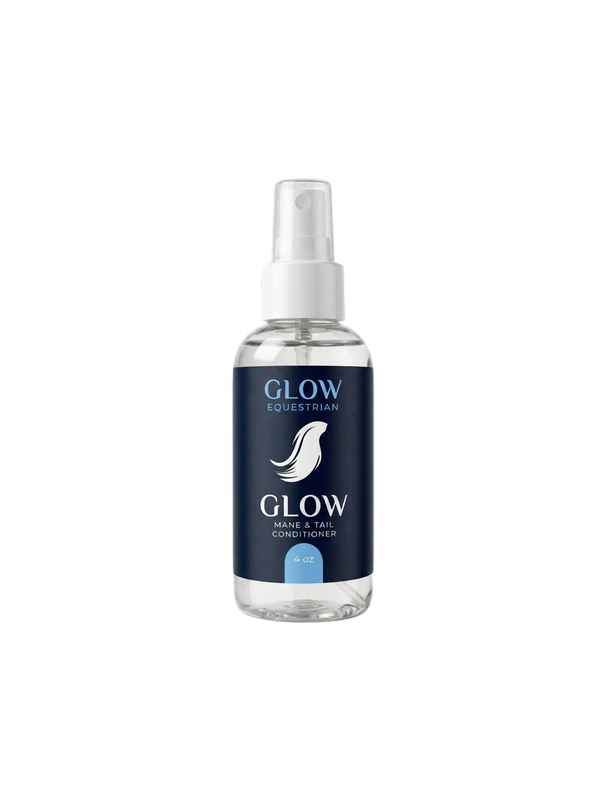
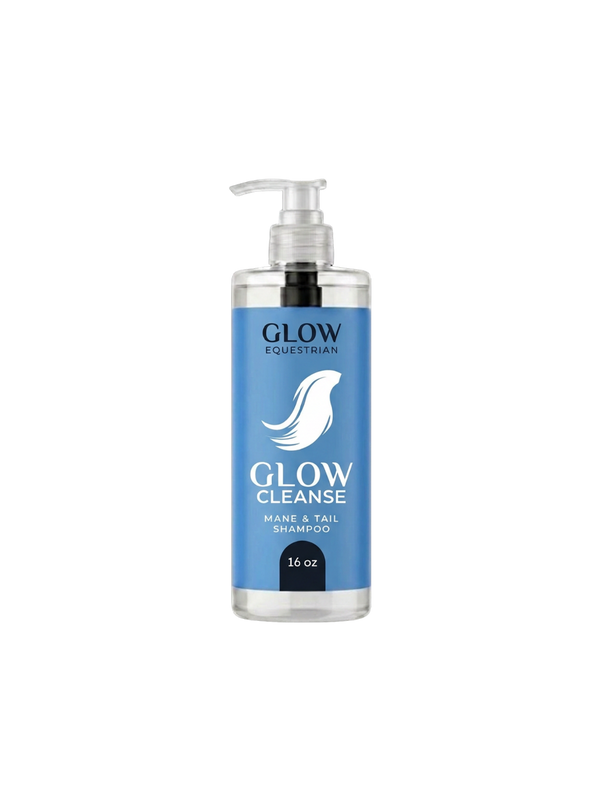
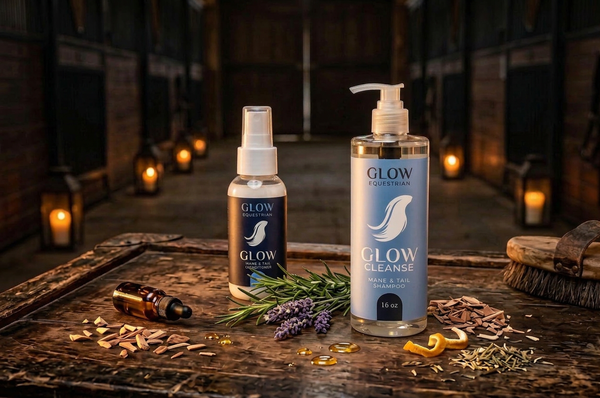
That is the principle behind a treatment-oriented system like Glow Equestrian: clarify what does not belong on the hair, condition with purpose, and keep the routine focused on results that compound.
Real shine is not a plastic-looking finish.
It is the visible result of hair that has been cared for well enough to reflect its health.
Your horse does not need another shortcut in the grooming tote.
It needs a routine that respects the difference between making hair look better for an afternoon and helping it stay better through the season.